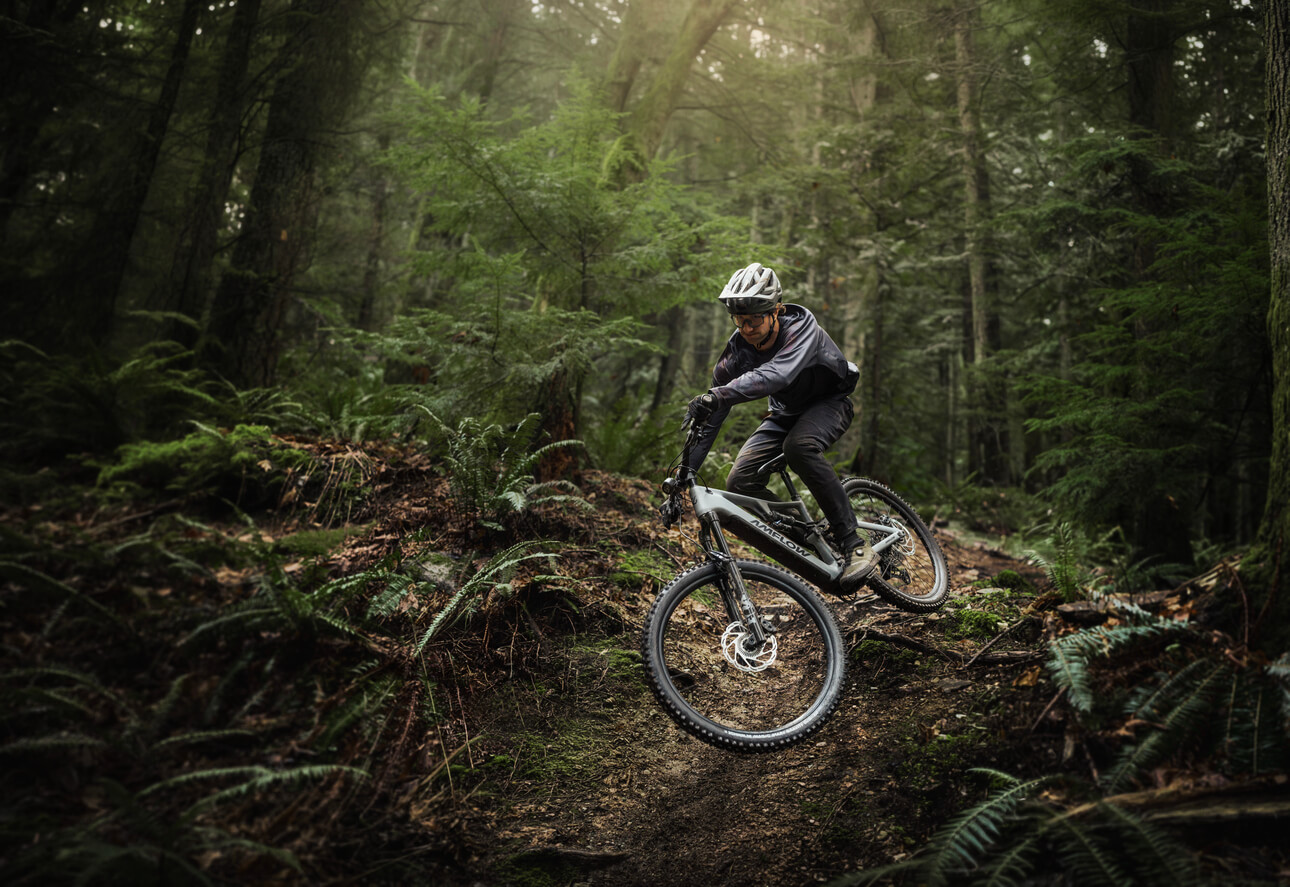
Electric mountain bike range depends on battery capacity, elevation gain, trail conditions, motor assistance, and rider effort. To estimate range for a mountain ride, use battery consumption from comparable routes and account for the climbing ahead. Distance, cumulative elevation gain, and energy use provide a more useful planning reference than mileage alone.
How Far Can an Electric Mountain Bike Go on One Charge?
The Amflow PX Carbon Pro covered about 89 miles (144 km) on one charge in a flat-road Eco-mode test with its 700Wh battery. The test used a rider weighing 176 lb (80 kg), a speed of about 13 mph (21 km/h), a cadence of 65 rpm, and default assistance settings. Mountain-trail range varies with climbing, surface conditions, and the amount of motor support used.
For mountain routes, compare both distance and cumulative climbing:
| Range Measure | What It Describes | When It Is Useful |
|---|---|---|
| Distance (miles) | Total route length traveled with battery assistance | Comparing rides with similar terrain and assistance settings |
| Cumulative elevation gain (feet) | Total vertical ascent along the route | Comparing the climbing demand of routes and uphill laps |
A 25-mile route with 1,000 ft of ascent and another with 4,000 ft of ascent impose different climbing loads. Distance helps describe the route, while cumulative elevation gain provides additional context for expected battery demand.
What Factors Affect Electric Mountain Bike Range?
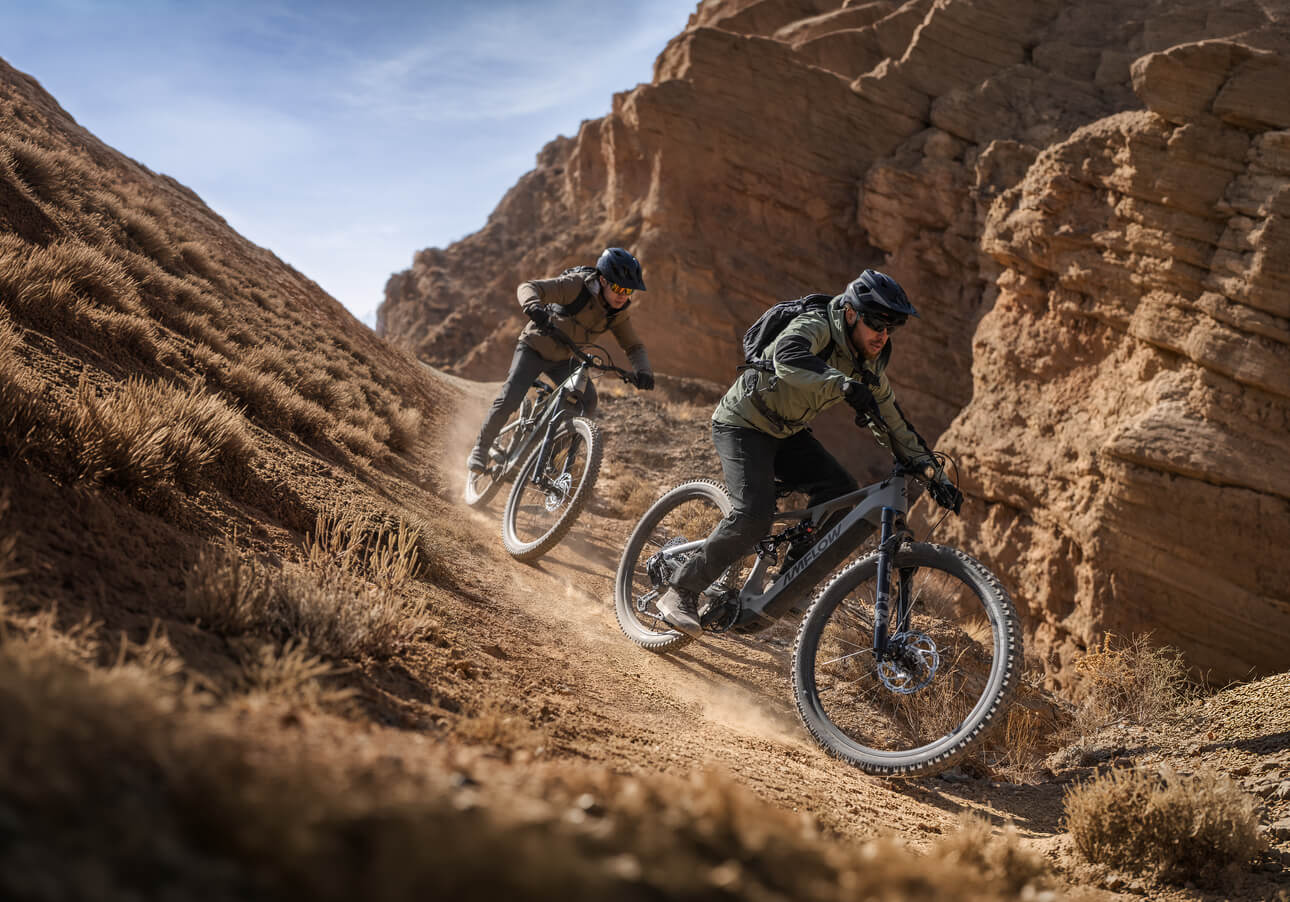
Elevation gain, trail resistance, motor assistance, rider power, total weight, and temperature influence how quickly an eMTB uses its battery. Their effects depend on the route and the bike's setup, so the same battery capacity can support different amounts of riding.
Elevation Gain and Trail Conditions
More climbing generally increases energy demand because the combined weight of the bike and rider gains gravitational potential energy. To illustrate the scale, lifting a combined 240 lb (about 109 kg) of bike, rider, and gear through 3,000 vertical feet requires roughly 270Wh of mechanical work against gravity. Rider pedaling supplies part of that work; the motor supplies another part, with additional energy lost through the drive system and rolling resistance. The 270Wh figure is therefore not a battery-consumption estimate.
Trail surfaces add another variable. Firm dirt tends to roll more easily than deep sand or mud. On technical off-road trails, rocks, roots, and repeated accelerations can increase energy demand even when the route is relatively short. Two routes with the same distance and ascent can therefore have different battery consumption.
Assist Mode, Rider Effort, and Cadence
Higher sustained motor assistance generally increases battery consumption when route conditions and riding speed are comparable. The motor's share of the work also depends on how hard the rider pedals. Two riders using the same assistance setting can therefore obtain different results, especially during long climbs.
Assistance modes change the relationship between rider input and motor output. Automatic modes may adjust support as terrain and rider demand change. Mode names such as Eco, Auto, and Turbo are not standardized measures of electrical consumption across different drive systems.
Gear selection influences the cadence and load at which the rider and motor operate. Shifting before a steep section and maintaining a manageable cadence can help avoid prolonged low-cadence, high-load pedaling. The appropriate cadence depends on the gradient, gearing, drive system, and rider.
Rider Load, Tire Setup, and Weather
Greater combined weight raises the energy required for climbing, while tire setup and weather alter the resistance and battery performance experienced on the trail. Include the rider, bike, water, tools, and other carried equipment when comparing overall load.
Tire tread, casing, and pressure affect both rolling losses and traction. Pressure that is too low for the setup may waste energy through casing deformation; excessive pressure can compromise grip and control on uneven ground. Use pressures appropriate to tire construction, rim limits, rider weight, and trail conditions. Brake drag and drivetrain friction can add avoidable losses.
Cold batteries can temporarily deliver less usable energy and power. Wind and riding speed also affect demand, particularly on exposed sections. Battery age and condition influence the capacity available over time, so previous range records are most useful when the bike and conditions remain reasonably comparable.
How Does Battery Capacity Affect eMTB Range?
Battery capacity sets the nominal energy available for motor assistance, while the bike's electrical consumption determines how far that energy goes. Capacity is measured in watt-hours (Wh), which should be distinguished from power in watts (W).
| Measurement | Meaning | Practical Use |
|---|---|---|
| Wh | Nominal stored battery energy | Comparing battery capacity |
| W | Power delivered or consumed at an instant | Understanding how quickly energy may be used |
| Wh/mile | Battery energy consumed per mile on a particular ride | Estimating range for similar conditions |
An 800Wh battery has about 33% more nominal stored energy than a 600Wh battery. With comparable usable energy fractions and the same Wh/mile consumption, the larger pack can support about 33% more distance. Different bikes, tires, motor settings, and rider inputs may change that relationship.
Peak motor power and torque describe available assistance under particular conditions, not the electrical energy consumed throughout a ride. A motor may deliver high output briefly on a steep obstacle and draw much less power on easier terrain.
How Can You Estimate eMTB Range for Your Ride?
Estimate eMTB range by measuring battery energy use on a comparable ride, applying that consumption to the planned distance, and checking the available charge against anticipated climbing. This approach is more useful for a particular trail than applying a generic miles-per-charge figure.
Estimate Energy Use From a Comparable Ride
Calculate observed battery consumption in Wh/mile by dividing electrical energy used by miles ridden. If the bike records energy use in Wh, use that value. Otherwise, a change in displayed battery percentage can provide an approximation:
Estimated energy used (Wh) = nominal capacity (Wh) × charge percentage points used / 100
Observed consumption (Wh/mile) = estimated energy used (Wh) / distance ridden (miles)
Consider an illustrative 18-mile ride on an 800Wh eMTB, with 2,400 ft of climbing and a battery indicator that falls from 90% to 45%:
| Ride Record | Value |
|---|---|
| Nominal battery capacity | 800Wh |
| Charge used | 45 percentage points |
| Estimated battery energy used | 360Wh |
| Distance | 18 miles |
| Cumulative ascent | 2,400 ft |
| Estimated consumption | 20 Wh/mile |
The calculation uses an approximate relationship between the charge indicator and nominal battery capacity; it is an illustrative example, not an Amflow ride result or a standard consumption rate. Battery-management estimates and usable capacity introduce uncertainty. Recording several rides with similar terrain and assistance provides a more reliable personal reference.
Adjust for Climbing and Leave a Battery Reserve
Apply your observed Wh/mile rate to routes with comparable climbing and surface conditions, then verify that the estimated demand fits within your planned battery budget. For a proposed 20-mile ride with 2,700 ft of ascent, the example's 20 Wh/mile rate gives an initial estimate of:
20 miles × 20 Wh/mile = 400Wh
Starting an 800Wh battery at 90% and planning to finish at or above 20% leaves an approximate energy budget of:
800Wh × (90% - 20%) = 560Wh
Using 400Wh represents 50 percentage points of the 800Wh pack's nominal capacity. In this simplified example, a 90% start leaves about 40% at the finish, above the planned 20% reserve.
The two example routes have similar climbing intensity by one simple measure: approximately 133 ft of ascent per mile on the reference ride and 135 ft per mile on the planned ride. That makes the recorded energy rate a plausible starting point, provided trail difficulty, assistance, load, and weather are also comparable. Equal ascent per mile does not guarantee equal battery demand.
For a route with longer technical climbs or substantially different surfaces, use a closer reference ride or plan for additional consumption. The location of climbs matters as well: substantial ascent near the end may coincide with reduced battery charge. Confirm eMTB access and any practical exit routes before committing to an unfamiliar trail.
How Can You Extend Your Electric Mountain Bike Range?
You can extend eMTB range by reducing sustained motor demand, maintaining efficient gearing, and eliminating avoidable rolling or mechanical resistance. Assistance should still be appropriate for the traction and control required by the trail.
| Adjustment | Effect on Energy Use | Practical Application |
|---|---|---|
| Use lighter assistance where practical | Reduces the motor's share of the workload | Reserve stronger support for demanding climbs and obstacles |
| Shift before steep climbs | Helps avoid unnecessarily high loads at very low cadence | Select a manageable gear before the gradient rises |
| Maintain steady pedal input | Allows the rider to contribute consistently | Pace effort across longer climbs rather than relying on abrupt surges |
| Set suitable tire pressures | Balances rolling resistance with traction | Follow tire and rim limits and adjust for terrain and total load |
| Maintain the drivetrain and brakes | Limits avoidable friction | Check for brake rub, chain wear, and poor drivetrain adjustment |
| Review consumption during the ride | Shows when energy demand is exceeding the plan | Reassess support and the remaining route before major climbs |
For a meaningful comparison, test changes on familiar trails with similar conditions. A lower assistance setting may reduce battery use but also change ride speed and physical effort, so compare results in the context of the ride you want to complete.
What Should You Look for in a Long-Range Electric Mountain Bike?
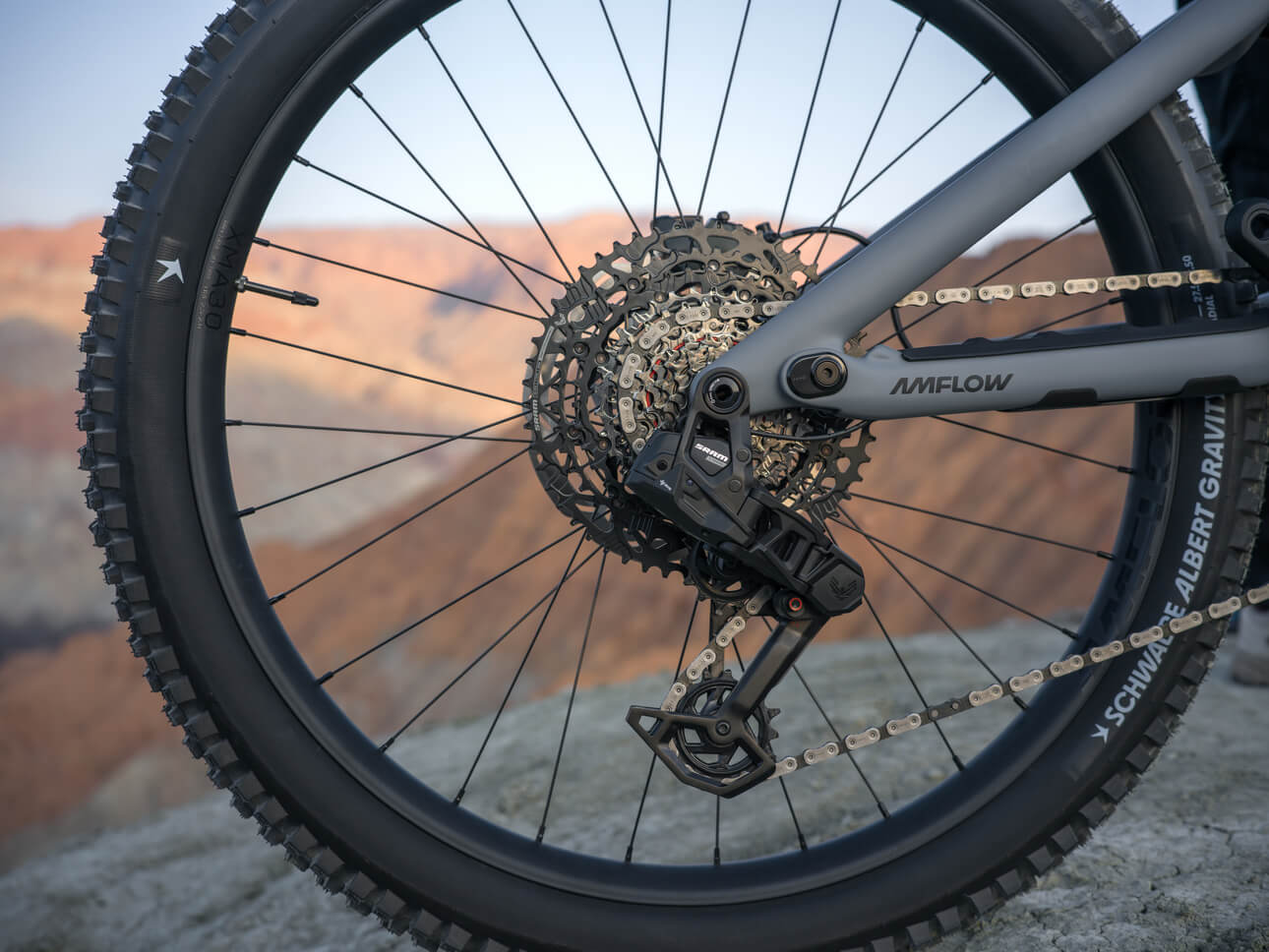
For longer mountain rides, evaluate battery energy, climbing demands, motor-support behavior, complete-bike handling, and practical charging or battery options together. A suitable configuration balances the intended route's energy demands with suspension, geometry, traction, and overall handling.
Four checks help narrow the choice:
- Energy capacity and configuration: Compare battery Wh ratings, supported battery options, and how much charge will be available when the ride begins.
- Climbing performance and consumption: Favor test results that disclose rider input, ascent, assistance setting, and route conditions. Distance figures are more comparable when their conditions are similar.
- Trail handling and total system weight: Consider suspension, geometry, tires, and the weight of the complete bike, including any additional battery carried.
- Charging or swapping logistics: Confirm compatible batteries and chargers, where charging will be possible, and whether a spare can be exchanged between riding segments.
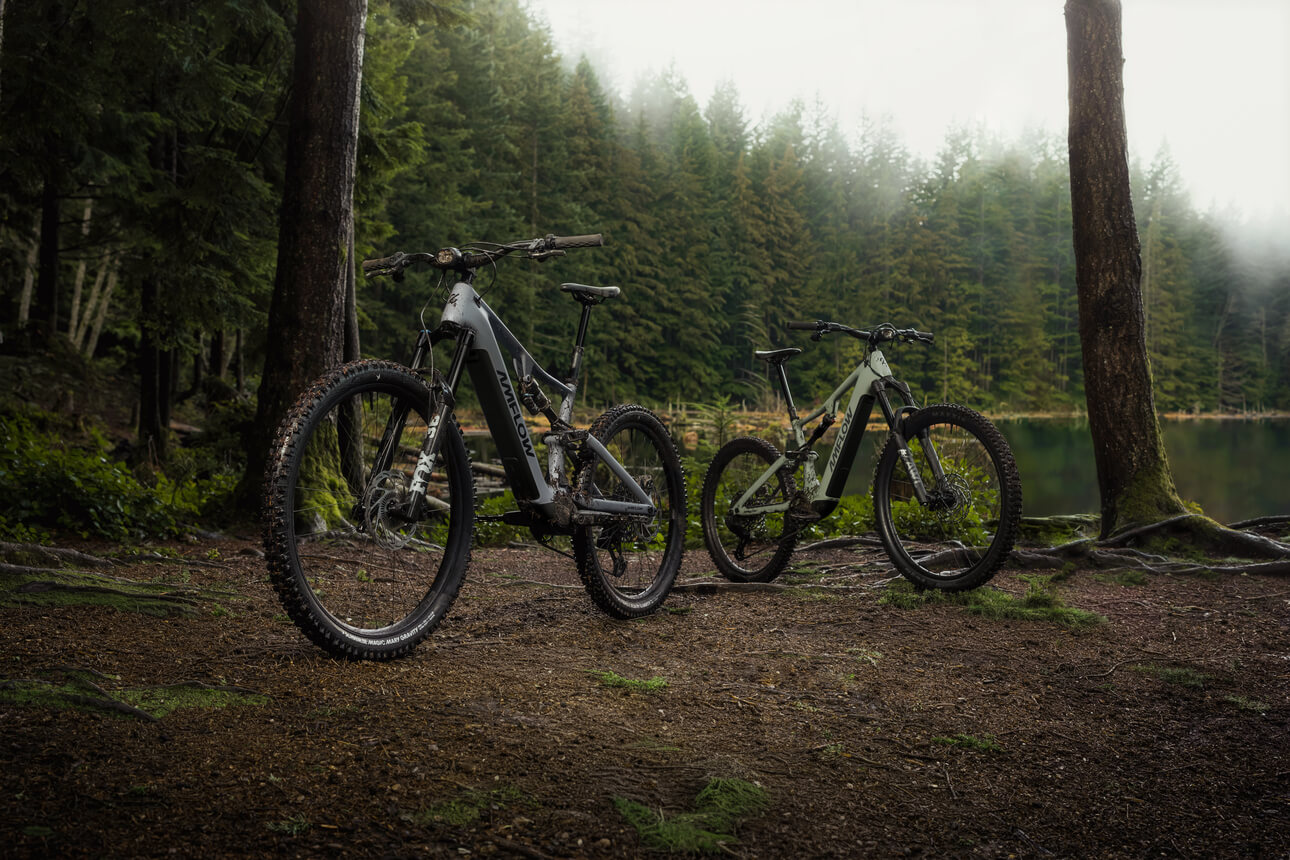
In its 800Wh configuration, the Amflow PR Carbon has a removable battery that can be charged away from the bike or exchanged for a compatible charged pack. That flexibility can support longer trips with a planned battery swap, without changing the range available from a single battery.
Frequently Asked Questions
Can You Pedal an Electric Mountain Bike When the Battery Runs Out?
Yes, many pedal-assist eMTBs can still be pedaled without motor support. Bike weight and the remaining terrain may make climbing harder. Check the operating behavior of the specific model, particularly when planning a route with a long uphill return.
Does an Electric Mountain Bike Recharge While Going Downhill?
Most mid-drive eMTBs do not recharge the battery while coasting downhill. Regenerative charging requires a drive system designed for energy recovery. Descents may use little motor assistance, but ordinary coasting does not restore the charge spent on earlier climbs.
Does Cold Weather Permanently Reduce eMTB Battery Range?
Cold weather can temporarily reduce the energy and power available from an eMTB battery. Normal performance may return as the battery warms. Long-term battery condition depends on aging, storage, and charging practices, so follow the manufacturer's temperature guidance.


